

Active
Adapting Workouts for Different Abilities
Aug
When most people think of “fitness,” the image that comes to mind is generally someone running a 5K, lifting heavy weights, or pushing through a high-intensity class. But look, here’s the truth: fitness is not one-size-fits-all. Everybody is different. Every journey is unique. And movement can (and should) be accessible to everyone, whether you’re an athlete, living with a disability, recovering from an injury, or navigating life from a wheelchair.
At Astro Active, we really believe fitness should be inclusive, empowering, and adaptable. So, here’s how we can approach workouts with flexibility, compassion, and creativity for different abilities. Read on to learn more about adapting workouts for different abilities.
Fitness For Wheelchair Users
Just because you’re seated doesn’t mean your workout can’t be super powerful. Many exercises can actually be adapted for a wheelchair, focusing on strength, mobility, and cardiovascular health.
Upper body strength: So here we have resistance bands and dumbbells. These are fantastic for building muscle in the arms, shoulders, and chest.
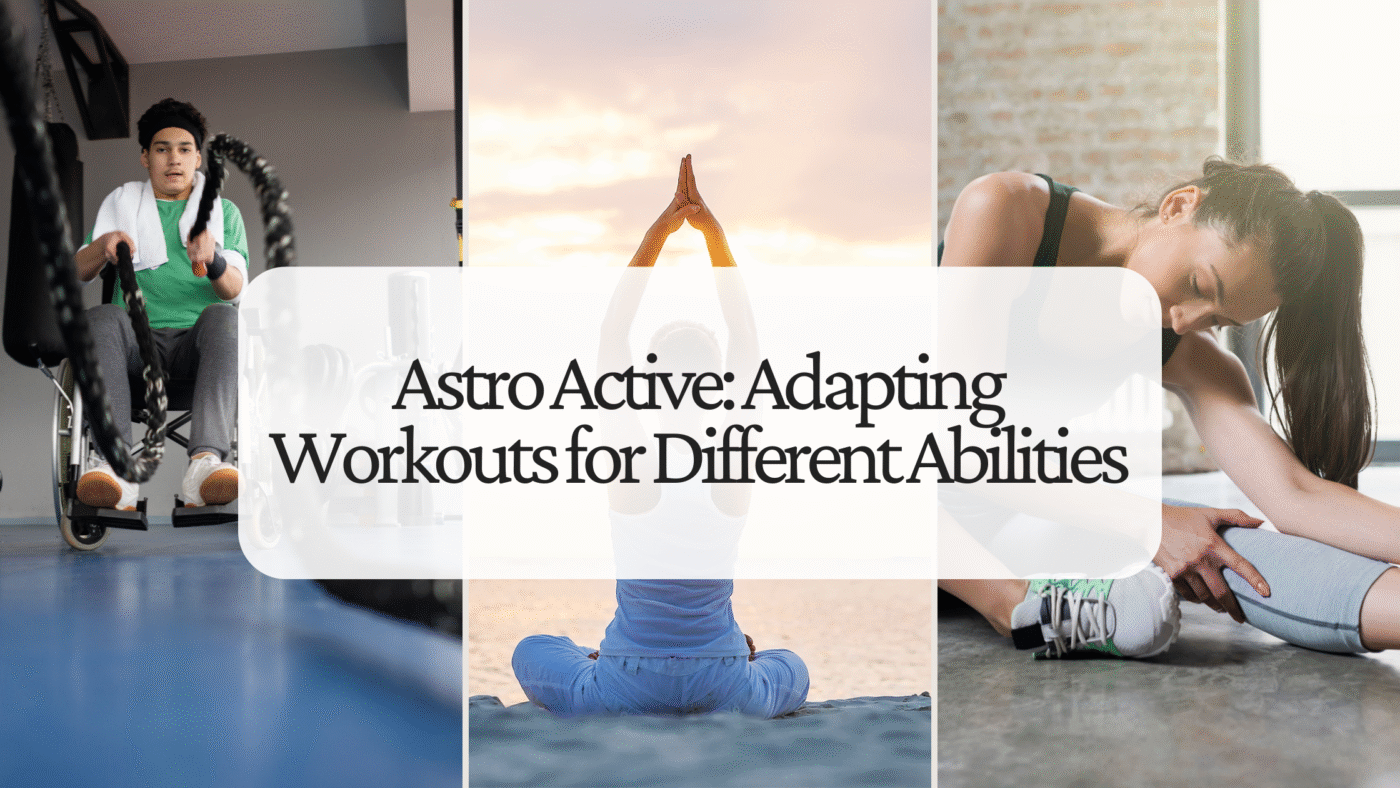
Cardio in a chair: Try wheelchair push drills, shadow boxing, or seated battle ropes for a heart-pumping session.
Core engagement: Even while seated, twisting motions or stability exercises can strengthen the abs and lower back.
Fitness For Those Living with Physical Disabilities
Not all disabilities look the same. Some people have limited mobility in certain limbs, while others may experience chronic conditions that affect endurance or balance. The key is adaptability and creativity.
Low-impact cardio: Swimming, cycling on a recumbent bike, or using an arm ergometer (hand bike) can be gentler on joints while still boosting endurance.
Modified strength training: You’ll want to focus on the areas of the body that have full mobility, while using assistive equipment (like straps, benches, or machines) to stabilize and protect vulnerable areas.
Balance work: For those with balance challenges, exercises can be performed seated, lying down, or using support like a wall or a bar.
Fitness for People Recovering from Injury
Coming back from an injury can feel frustrating, you want to move, but you also want to protect your body. It is important to go on your doctor’s advice, but when it is safe to start exercising again, adaptation is everything here.
Start small: So, instead of pushing through pain, focus on rebuilding with controlled, targeted movements.
Physical therapy-inspired exercises: Here we have resistance bands, light weights, and bodyweight moves can help strengthen the injured area safely.
Cross-training: If one part of the body needs rest, use the opportunity to work on other areas. For example, training the upper body while a leg heals.
Fitness for People with Visual Impairments
Movement can still be fun, safe, and empowering with the right cues.
Tactile or verbal guidance: Trainers can use touch (with consent) or clear verbal directions instead of visual demonstration.
Consistent environment: Practicing in a familiar, clutter-free space. This builds confidence and independence.
Great options: So things like yoga, strength training with machines, tandem cycling, or swimming.
Fitness for Neurodivergent People (Autism, ADHD, etc.)
Movement can support both physical health and mental wellbeing.
Routine & structure: Start with a predictable workout pattern. This can reduce anxiety and build comfort.
Stimulating movement: Activities like boxing, rock climbing, or interval training can provide focus and release energy.
Gentle options: Yoga, swimming, or stretching routines can help with sensory regulation. These are all great options.
Fitness for Older Adults
Aging bodies often need low-impact, joint-friendly movement.
Mobility & balance: Chair yoga, tai chi, or light strength training can help prevent falls, all while being more gentle.
Bone & muscle strength: Resistance bands and bodyweight exercises are safe and effective.
Cardio options: Walking, swimming, or recumbent cycling keep the heart healthy without stress on the joints.
Fitness for People Living with Chronic Illness or Fatigue
Conditions like MS, fibromyalgia, or long-COVID can make energy and mobility fluctuate day to day, so workouts need flexibility.
Pacing strategies: What is best here is gentle, short sessions with plenty of rest breaks.
Gentle movement: Stretching, water aerobics, or light resistance work are great options.
Adaptive mindset: Progress may look different, and that’s okay, consistency matters more than intensity.
The Bigger Picture: Mindset & Community
No matter your ability, fitness should never feel like a punishment or a competition. It’s about, moving in ways that feel good. Celebrating what your body can do, not dwelling on what it can’t. And finding community support. Whether in adaptive fitness classes, online groups, or a gym that values inclusivity, and you’ll find that all here in the Astro Active. We really are one big family here.
Fitness Is More Than Physical Strength
At the heart of it, fitness is about resilience, joy, and connection. Everyone deserves access to that, no matter their ability. By adapting workouts for different abilities, listening to individual needs, and shifting the conversation toward inclusivity, we create space for all bodies to thrive. At Astro Active most of our gym equipment is wheelchair accessible. You can watch our video on our social media accounts to see how each piece of equipment is accessible. Our gym instructors are always on hand to give you a hand if needed.
Because fitness isn’t about fitting into a mould. It’s about finding your own rhythm, your own strength, your own version of “active.”
Follow Our Facebook Page Follow Our Instagram Page